Common Mistakes When Wearing Flared Jeans with Long Coats (and How to Fix Them)
Flared jeans and a long coat are two of the most flattering pieces a retro wardrobe can hold. Worn together without thought, something odd happens: you vanish. The coat hides the waist, the flare blurs the leg, and what should be a confident 1970s line becomes one long stretch of fabric from shoulder to shoe. The good news is that the fix rarely involves buying anything new. It is usually a hemline, a belt or a different pair of shoes. Here are the mistakes that flatten the look most often, and what to do instead.
The hem lands on the widest part of the flare
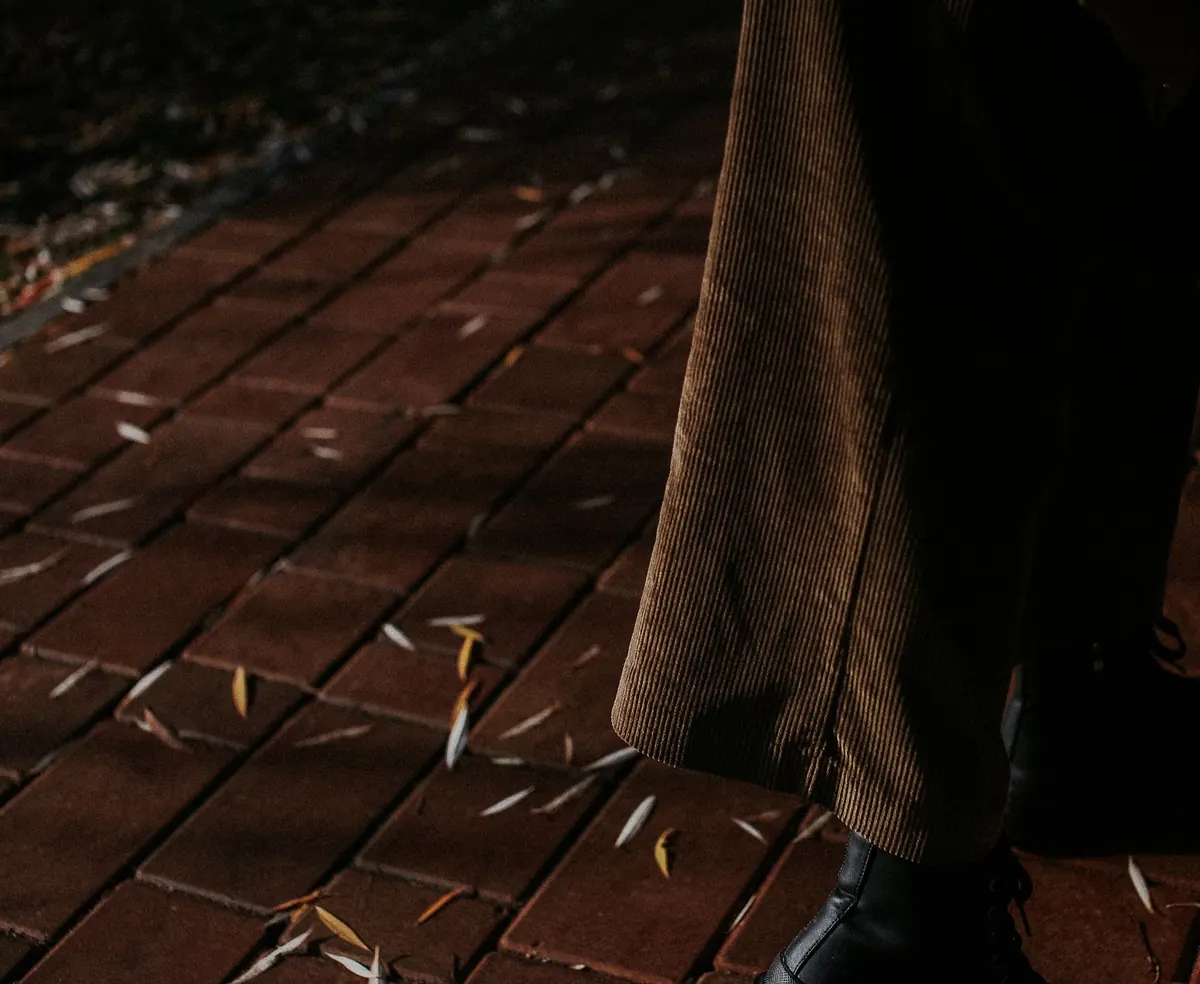
This is the one that catches almost everybody. A coat finishing around mid-calf sits exactly where a flare begins to widen away from the knee. What you get is two horizontal lines meeting at the least helpful point on the body: the coat hem, then the denim kicking out just beneath it. The eye stops there, and the leg reads short and wide.
There is a subtler version of the same problem — a coat that ends at almost the same level as the jean hem. Two hems a centimetre apart look like an accident. Two hems deliberately separated look like styling.
The fix: choose one of two clear zones. Either wear a coat that stops at or above the knee — a short trench, a boxy sixties jacket, a cropped pea coat — so the whole flare is on show from hip to hem. Or go properly long, with a coat that carries well past the widest point of the flare and finishes near the ankle, ideally 10–15cm below it. The middle ground is what causes trouble. If you love a mid-length coat and will not part with it, wear it open so the vertical line of the leg stays visible, and pair it with a gentler bootcut rather than a full flare.
Volume stacked on volume
A heavy double-breasted wool coat layered over wide flares, a chunky knit and a thick scarf does not look seventies. It looks like a duvet with legs. Volume is not the enemy; unmanaged volume is.
The simplest rule is to let one half of the outfit be the big shape and keep the other half lean. If your jeans are a proper wide flare, look for a coat with a clean, straight line: single-breasted, minimal shoulder padding, raglan or set-in sleeves that sit close to the arm. If the coat is the statement — a deep-collared, slightly swaggering seventies number — bring the jeans back to a modest flare or a straight leg with a gentle kick.
Fabric matters as much as cut. Thick, stiff wool over stiff, heavy denim has nowhere to move. Softer coatings, brushed wool blends and fine corduroy drape better against denim and let the flare do its work. Check the coat's own belt, too: a bulky coat cinched tightly over wide jeans creates a triangle that only works with a good heel and a lot of confidence.
Hiding the waist completely
A long coat is, by design, a rectangle. Add a flare and you have two rectangles stacked, with the body lost somewhere inside them. The waist is the hinge of the whole retro silhouette — the seventies look is fitted in the middle and wide at the hem, not wide everywhere.
You do not need to button up and cinch yourself like a parcel. You need one visible reference point at the waist:
- A belt over the knit. A slim leather belt at the natural waist, worn with the coat open, gives the eye somewhere to land.
- A tucked top. Even a half-tuck into high-rise flares changes the proportions immediately.
- A short jacket underneath. If the coat stays open, a cropped jacket or cardigan ending at the waist does the work for you.
- A scarf knotted at the throat. Small move, real effect — it pulls attention upwards instead of down to the hem.
Bear the rise of the jeans in mind. High-rise flares are far easier to style with a long coat, because the waistband sits where the belt should be. Low-rise flares, a long coat and a tucked top is a combination that rarely behaves.
Ignoring what is on your feet
Flares are the one jean shape that genuinely needs help at the ankle. A long coat adds weight and length, so a delicate flat tends to get swallowed, and the whole outfit sags towards the floor.
Three reliable options: a stacked-heel boot with a pointed or almond toe, a platform sandal or clog in warmer months, or a chunky loafer with a bit of height. Keep the shape narrow near the ankle where you can. A pointed toe continues the line the flare started; a round, heavy toe stops it dead.
Then check the length of the jean against the shoes you actually wear. With heels, the hem should just skim the floor at the back with a small crease at the front. With flats, a long flare drags, frays and looks borrowed from someone taller. Either have them hemmed, or save the flats for a slimmer flare.
Muddy colour and busy texture
Retro dressing invites rust, mustard, camel, chocolate and cream. Put all of them together under a long coat and you get a soft blur where nothing reads as a line. The leg has to be distinguishable from the coat, or the silhouette collapses into one tone.
Contrast or tonal both work; the muddle in between does not. Dark indigo denim beneath a camel or cream coat is sharp. Ecru jeans beneath a chocolate wool coat is a strong seventies pairing. Detail is the other trap: contrast stitching, heavy fading, patch pockets, a patterned coat and a print on top, all at once. Limit yourself to one patterned or heavily textured piece per outfit and keep everything else plain.
Before you walk out of the door
Stand two metres back from a full-length mirror — not close up — and run through this:
- Can you see where your waist is? If not, add a belt, tuck the top, or open the coat.
- Does the coat hem sit clearly above the knee, or clearly below the widest part of the flare?
- Is there one dominant volume rather than two?
- Do your shoes extend the line rather than stop it?
- Can you walk, sit and climb stairs without hitching the coat up every thirty seconds?
That last point matters more than it sounds. A long coat over flares is a lot of fabric, and if you are constantly rearranging it, the outfit will look uncomfortable whatever the mirror says. Sort the hem, keep the waist visible, choose the right shoe, and the retro line looks after itself.
Photo: GildAix / Pixabay

You Might Also Like
From Gloucester Road's charity-shop trail to Sunday swaps in Southville, here's how to hunt, repair and trade retro fashion finds across Bristol.
A practical guide to the vintage cues — silhouette, fabric, colour and accessories — that make an outfit read retro rather than fancy dress, plus how to style them for everyday wear.