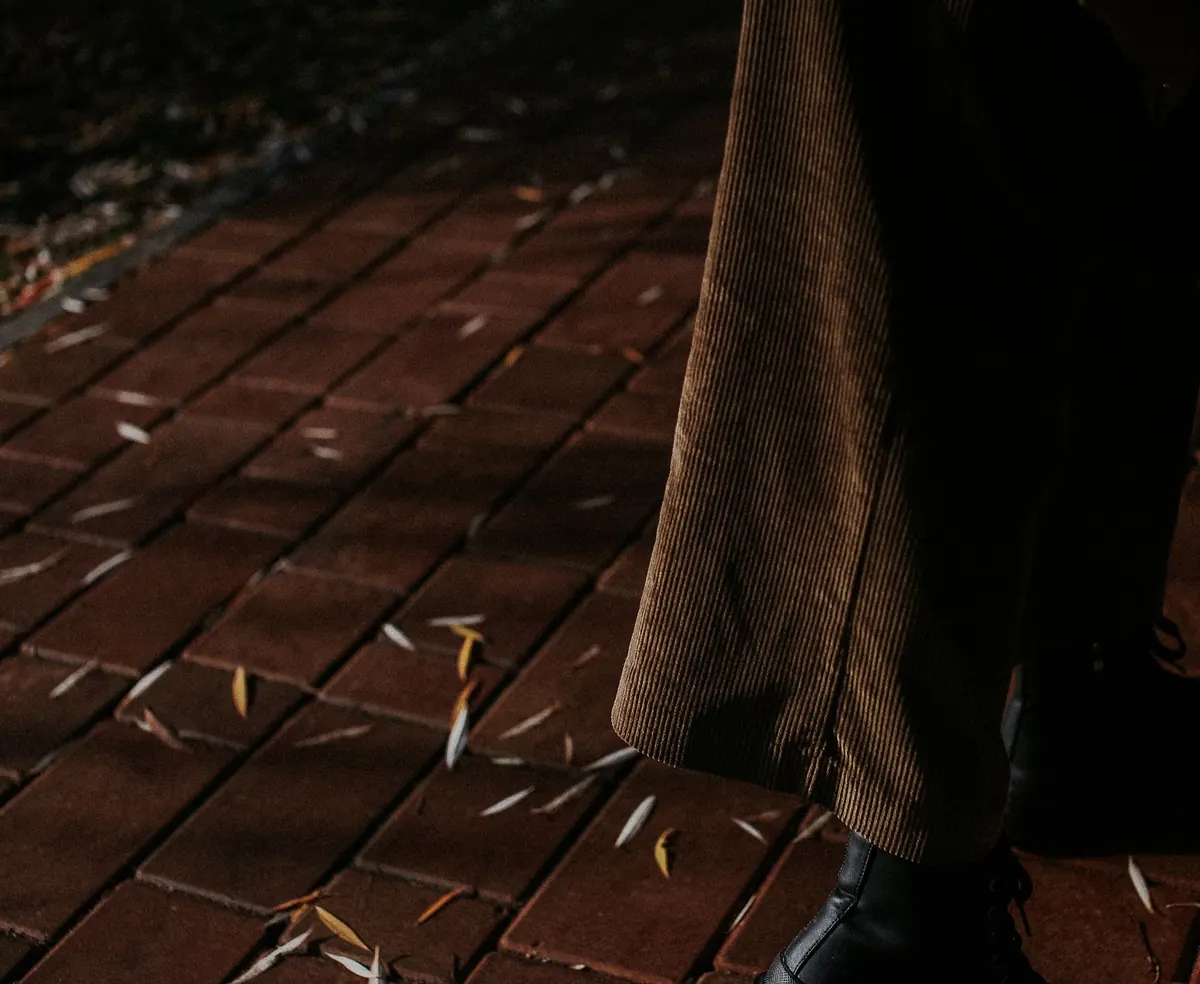
Corduroy vs Denim Flares: Which Retro Trouser Works Best for British Weather?
British weather does not do seasons neatly. You can leave the house in bright October sunshine and come home in horizontal drizzle, with a wind that finds the gap between your jumper and your waistband. Flares handle that unpredictability better than most trousers: the cut sits well over boots, the drape covers the ankle, and there is room underneath for a thermal layer when the temperature drops without warning.
The real question is fabric. Corduroy and denim are both cotton, both look right with a battered leather jacket, and both have been in and out of fashion since the 1970s. Yet they behave very differently once the pavements turn slick and the air gets that damp, heavy chill.
How the Two Fabrics Actually Differ
Corduroy is woven with extra weft yarns that float across the surface, which are then cut to create a pile — the wales. Fine needlecord has narrow wales and a flatter, smarter look. Wide-wale cord has a deep, chunky texture that photographs beautifully and hides scuffs well. That pile is what makes corduroy feel soft and warm rather than crisp.
Denim is a twill weave, usually with an indigo-dyed warp and a natural weft, which is why it fades along the seams and knees rather than wearing evenly. It is denser and heavier than cord in most cases, but that density is exactly what makes it good in wind and awkward in a downpour.
Warmth: Corduroy Wins on Cold, Dry Days
Pile traps air, and trapped air insulates. A mid-weight pair of cords feels warmer against bare legs than a similar-weight denim, purely because the surface is brushed rather than smooth. On a still, frosty morning, corduroy is the more comfortable choice, and it needs less layering underneath.
Denim has its own advantage: the tight twill weave blocks wind far better than a pile surface does. That matters on an exposed seafront or a railway platform where the breeze cuts through everything. A heavyweight denim — the sort that stands up on its own when you take it off — will keep more of that wind out than cord ever will.
For most of the British year, the honest answer is that both work, but with different supporting acts. Cords plus a wool coat for a dry cold snap; heavier denim with thermals underneath for a blustery January commute.
Rain: Denim Is Better Than Its Reputation
Neither fabric is waterproof, and anyone who tells you otherwise has not stood at a bus stop in November. But they fail in different ways.
Corduroy's wales hold water on the surface, so the fabric darkens quickly and the pile can mat down where it rubs. Once wet, cord feels clammy and loses some of its shape. The upside is that it tends to dry faster and holds less water weight than a comparable denim, so a short shower is survivable.
Denim absorbs more slowly at first, which lulls you into a false sense of security. Then it saturates, goes cold and heavy, and stays that way for hours. If you get properly soaked in denim, you will feel it in your knees for the rest of the day. Dark indigo also transfers onto pale upholstery and light trainers when wet, which is worth remembering before you sit down on a cream sofa.
Practical measures that genuinely help:
- Have your flares hemmed to just brush the top of your boots rather than pooling at the ankle. A wet hem wicks water upwards all day.
- Wear boots or shoes with a bit of height in wet months — trainers and long hems are a miserable combination.
- Re-proof cotton with a spray designed for the job, following the tin. It will not make trousers waterproof, but it slows absorption noticeably.
- Keep a spare pair at work if you cycle or walk a long way in. Changing trousers at lunchtime is a small luxury.
Comfort and How They Wear Over a Season
Corduroy is comfortable from the first wear. There is no break-in period, no stiff waistband digging in, and the brushed surface feels kind against the skin. The trade-off is that the pile crushes where you sit and thins where your thighs rub together, so a well-loved pair will show its history after a year or two of regular wear.
Denim asks for patience. New raw denim is unforgiving for the first few weeks, then moulds to your shape and becomes the most comfortable trouser you own. It also bags at the knees and seat over time, which is part of the charm but does soften the line of a flare.
One fit note that applies to both: proper flares should be snug through the hip and thigh, then open from the knee down. If the flare starts at the calf you get a bell shape rather than a flare, and it will fight every pair of boots you own.
Styling: Two Very Different Messages
Corduroy reads warm, bookish and a little bit 1970s in the best way. Think tan, rust, olive, mustard and burgundy, worn with a roll-neck, a wool overcoat and suede boots. It looks considered without trying too hard, and it photographs well in autumn light.
Denim is more direct. Indigo, ecru, black or a washed grey with a band tee, a battered leather jacket and Cuban-heeled boots is the classic flare look, and it carries across all four seasons without much thought.
Quick combinations that work:
- Wide-wale cord in rust with a cream knit, brown boots and a camel coat for a cold dry weekend.
- Mid-blue denim flares with a striped long-sleeve tee and a denim or suede jacket for gigs and pubs.
- Black needlecord with a fitted turtleneck and heeled boots — smart enough for dinner, still retro.
- Ecru or off-white denim in summer with a linen shirt, saved for dry days only.
Care, Drying and Storage
Wash corduroy inside out on a cool cycle and hang it to dry away from direct heat. A hot tumble dryer will flatten the pile permanently. Once dry, a soft brush along the wale brings the texture back up. Denim should be washed far less often than most people wash it — spot clean, air it out, and only machine wash when it genuinely needs it, again inside out and cold.
Mud is a British inevitability. Let it dry completely, then brush it off before you go anywhere near water, or you will push the mud deeper into the fibres.
So Which Pair Should You Buy?
If you can only own one, buy denim in a heavier weight and have it hemmed for boots. It copes with wind and light rain, works year-round and takes a battering without complaint. Add a reproofing spray and it will handle most of what a British autumn throws at it.
If you already have denim sorted, corduroy is the pair that fills the gap. It is warmer and softer for dry cold days, it dresses up more easily, and it gives your wardrobe a texture that denim simply cannot. Own both, wear the cords when the sky looks settled and the denim when it does not — and keep an umbrella in the car either way.
Photo: Nikita Nikitin / Pexels

You Might Also Like
From Gloucester Road's charity-shop trail to Sunday swaps in Southville, here's how to hunt, repair and trade retro fashion finds across Bristol.
A practical guide to the vintage cues — silhouette, fabric, colour and accessories — that make an outfit read retro rather than fancy dress, plus how to style them for everyday wear.