What Makes an Outfit Look Retro? A UK Beginner's Explainer
A retro look isn't a costume you climb into. It's a set of visual signals — the shape of a shoulder, the weight of a fabric, the colour of a scarf — that pull an outfit towards a decade without shouting about it. The people who get this right are usually doing three or four small things deliberately and leaving everything else alone. Here's how those signals work, and how to spot them in your own wardrobe.
Silhouette: where the volume sits
Every decade makes a decision about volume, and that decision is the loudest thing about an outfit. The 1940s put structure in the shoulder, nipped the waist and kept hems just below or on the knee. The 1950s cinched the waist hard and pushed fabric outwards into circle skirts, or pulled it in tight for pencil skirts. The 1960s dropped the waist and shortened the hem. The 1970s raised the waistband and flared everything below the knee. The 1980s built up the shoulders and tapered the bottom. The 1990s went soft and narrow, with slip dresses and straight jeans.
Practically, this means you can change how an outfit reads by changing one proportion. Want a 1950s feel? Choose a skirt with a defined waistband and a fuller hem, then tuck in a fitted knit. Want the 1970s? A high-rise trouser that flares from the knee, worn with a long-collared shirt. The trick is to keep one element quietly modern — plain tights, a simple tee, a slim leather belt — so the silhouette looks worn rather than staged.
Fabric and texture: the cue people feel before they see
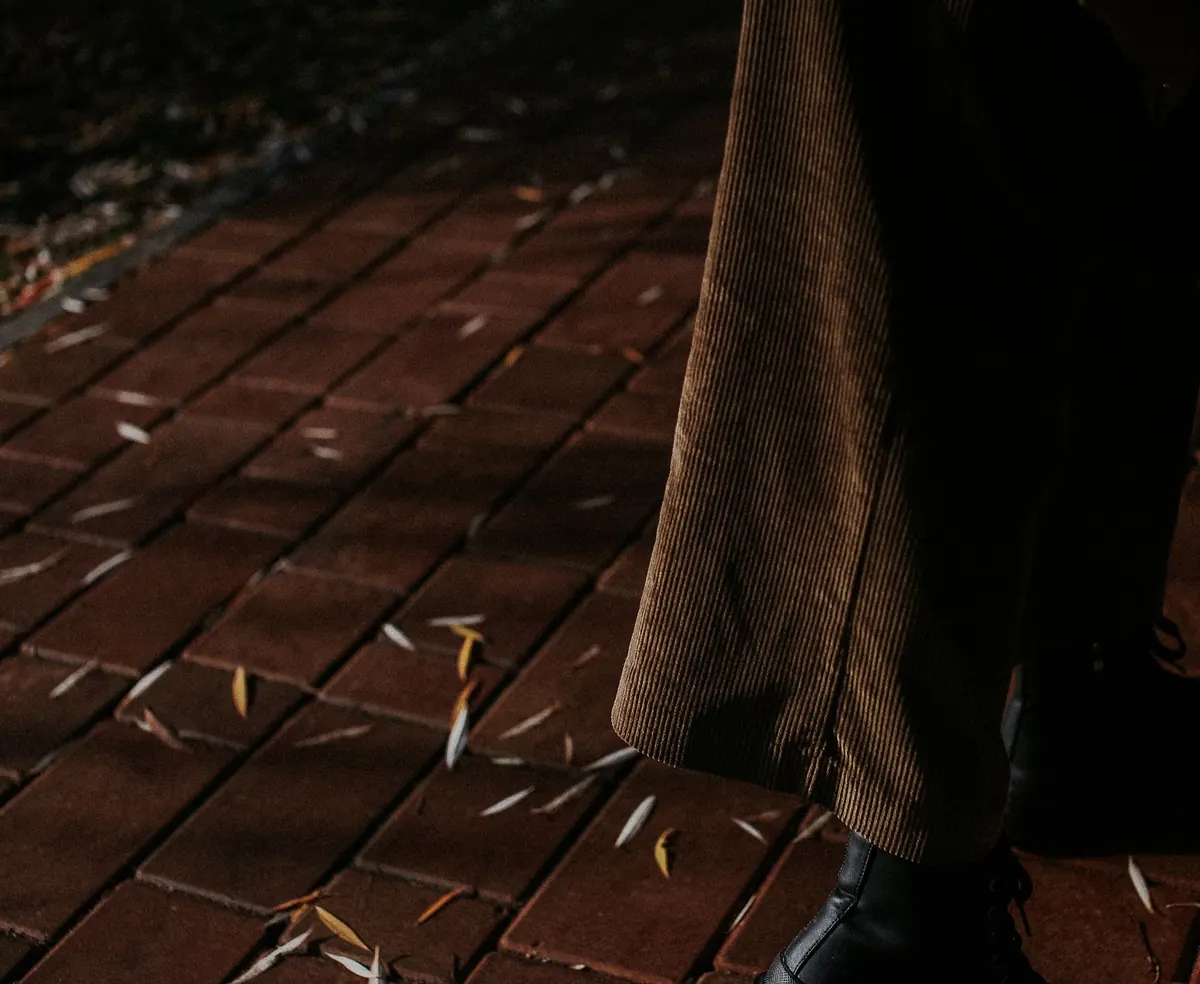
Before anyone registers a collar shape, they register drape and sheen. Heavy, matte fabrics with body read mid-century: wool crepe, gabardine, tweed, thick cotton. Crisp fabrics with a dry finish read earlier still: poplin, seersucker, barkcloth, linen that creases honestly. Texture does a lot of the work too — corduroy, needlecord, velvet, wool knitwear, anything with a visible weave.
What quietly reads as modern
High-stretch jersey, technical fabrics with a slick sheen, elastane-heavy denim and thin shiny satin all pull an outfit towards the present. That last one matters most: cheap, glossy polyester satin is the single fastest route to fancy dress. Early synthetics can work — matte, structured Crimplene or Terylene has a genuine period feel — but anything thin, squeaky and reflective will undo an otherwise good outfit.
In charity shops and at vintage fairs, check the label and the seams, then handle the garment. If it holds a crease, has a bit of weight and feels slightly stiff, it will read retro. If it slips through your fingers like a shower curtain, leave it.
Colour and print: build a palette, not a costume
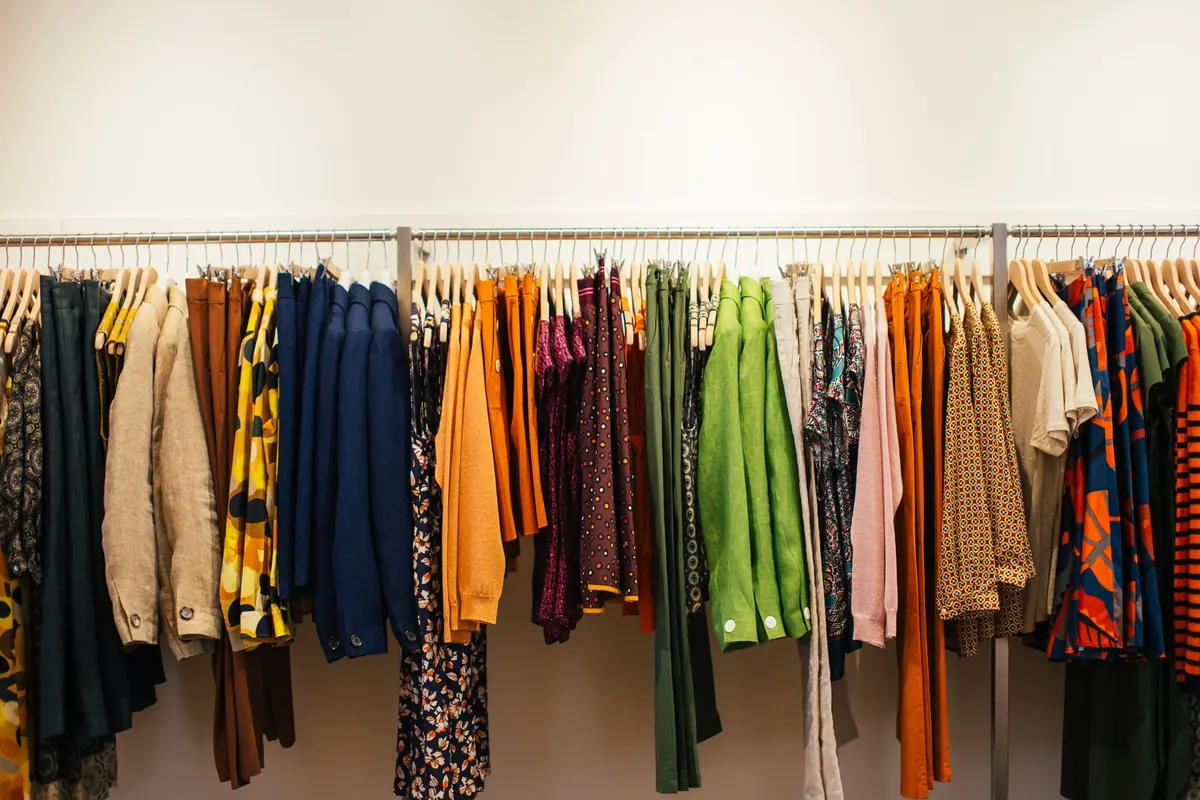
Vintage colours are usually off-tones rather than pure, clean brights: mustard, rust, avocado, teal, camel, oatmeal, bottle green, chocolate brown, cream and dusty pink. Prints follow the same logic. Small ditsy florals and wallpaper-scale blooms lean 1940s and 1950s. Paisley, op-art geometrics and big abstract shapes lean 1960s and 1970s. Houndstooth, tartan and awning stripes are more or less timeless, which makes them useful anchors.
A simple rule: pick two colours from a decade's palette and keep everything else neutral. The moment you mix a neon accessory into a 1950s outfit, you've crossed from retro into dressing up.
Accessories and grooming: the small things that finish the look
Accessories carry more weight than most people expect, and grooming carries more still.
- Glasses: cat-eye, round wire or oversized acetate frames.
- Hair: set curls, a blunt bob, a soft side parting, a low beehive; for shorter hair, a neat side part with a little shine.
- Hats and scarves: a beret, a pillbox, or a silk scarf knotted at the throat or tied over the hair.
- Jewellery: a cameo brooch, small pearls, one bold resin bangle, a thin gold chain. Restraint beats sparkle.
- Shoes: Mary Janes, T-bars, patent loafers, saddle shoes or a block-heeled ankle boot.
- Bags: a structured clutch, a small frame bag or a boxy shoulder bag.
Choose two or three from that list, not all six. Leaving the rest plain is what makes the look deliberate. And remember that hair is part of the outfit: a 1950s dress with unstyled hair reads as a dress-up box, while the same dress with a bit of volume at the crown looks like a choice.
Retro or fancy dress? A quick test
The gap between the two is usually about era discipline, restraint and fit. Run your outfit through these checks before you leave the house:
- One era at a time. A 1940s blouse with 1980s shoulder pads fights itself, and the result looks like a costume.
- One or two strong cues, everything else quiet. A full skirt plus a scarf plus a hat plus gloves is a stage outfit. A full skirt plus a plain knit is a wardrobe.
- Fit is everything. Costume looks borrowed. Retro looks owned. If a piece needs taking in or shortening, have it altered.
- Fabric honesty. Matte, textured and natural beats shiny and synthetic every time.
- Finish the story. Shoes, bag and hair should belong to the same decade as the clothes, even loosely.
- Skip the props. Novelty items and oversized plastic jewellery tip a good outfit into pantomime.
- Check in daylight. Shine, stretch and static only show up properly in natural light.
Styling it into real life
Start with one cue and live with it for a week. A corduroy jacket over jeans. A silk scarf with a plain white shirt. A full skirt with a modern fitted tee and flat shoes. A wool waistcoat over a simple dress. Once one element feels normal, add a second.
Buy fewer, better pieces. A well-cut 1960s shift or a 1970s wool coat will serve you for years and improve the longer you wear it; a pile of cheap costume pieces will sit in the wardrobe feeling like a commitment. Bear in mind that vintage sizing runs small and garments are often altered, so measure yourself rather than trusting the label, and don't be shy about having something taken in. Retro is at its best when it looks like it belongs to you — not like you borrowed it for the evening.
Photo: Pavlofox / Pixabay


You Might Also Like
From Gloucester Road's charity-shop trail to Sunday swaps in Southville, here's how to hunt, repair and trade retro fashion finds across Bristol.
The long coat and flared jeans pairing can flatten the retro silhouette in a dozen small ways. Here are the common mistakes, and the practical fixes that bring the shape back.