How to Style Flared Jeans for a British Autumn: Layering Without Losing the Seventies Line
Flared jeans are generous trousers. They flatter the hip, lengthen the leg and do half of the styling work before you have even chosen a top. Then October arrives, the heating goes on, and you find yourself pulling a chunky jumper over your head while wondering why the whole outfit has gone shapeless. Layering over flares is not complicated, but it does follow a logic. Get the proportions right and you can wear wool, corduroy and knee-high boots without burying the seventies line you bought the jeans for in the first place.
The Rule That Holds Everything Together
The flare creates volume from the knee down, so everything above it needs to sit close to the body or be deliberately structured. When the top half is as loose as the bottom half, the eye reads one long column of fabric and your waist disappears.
Think of the outfit as two shapes meeting at a waist you can actually see. That usually means tucking: a fine merino roll neck into high-waisted flares, a ribbed vest under a cardigan, a fitted long-sleeve tee beneath a pinafore dress. If you would rather wear a jumper loose, choose one that finishes at the hip bone rather than the thigh, so the flare still has room to swing as you walk.
High-waisted styles are the easiest to layer because the waistband sits at your narrowest point. If yours sit lower, a belt stops being an accessory and starts being a tool. A wide leather belt in tan or oxblood, worn over a thin knit, does more for a retro silhouette than any amount of clever accessorising.
Knitwear: Choose the Weight, Then the Shape
Fine knits do the heavy lifting
A thin lambswool, merino or cashmere-blend jumper tucked into flares gives you warmth with almost no bulk. Look for ribbed or pointelle textures, which echo the era without looking costumey, and half-tuck the front if a full tuck feels too neat. Fine knits are also the best base layer under a coat, because they slide rather than bunch at the sleeve.
Chunky knits need a belt or a crop
Aran, mohair and oversized cable jumpers are the heart of an autumn wardrobe, but they fight a flare if you let them hang past the hip. Two fixes work. Either choose a cropped shape that stops at the waistband, or wear the jumper open over a fitted base and belt it at the natural waist. A chunky knit worn loose and unbelted over wide-leg jeans is the single most common way to lose the seventies line.
Cardigans are the autumn workhorse
A longline cardigan, belted, is essentially a coat for mild days. Grandad collars, contrast buttons and patch pockets all lean vintage. Worn open over a tucked-in vest and flares, it keeps the vertical line clean without squeezing you into anything.
Coats and Jackets: Mind the Hem
Coat length matters more than coat style with flares, because you now have two hems competing for attention. Get it wrong and the leg looks chopped in half, no matter how good the boots are.
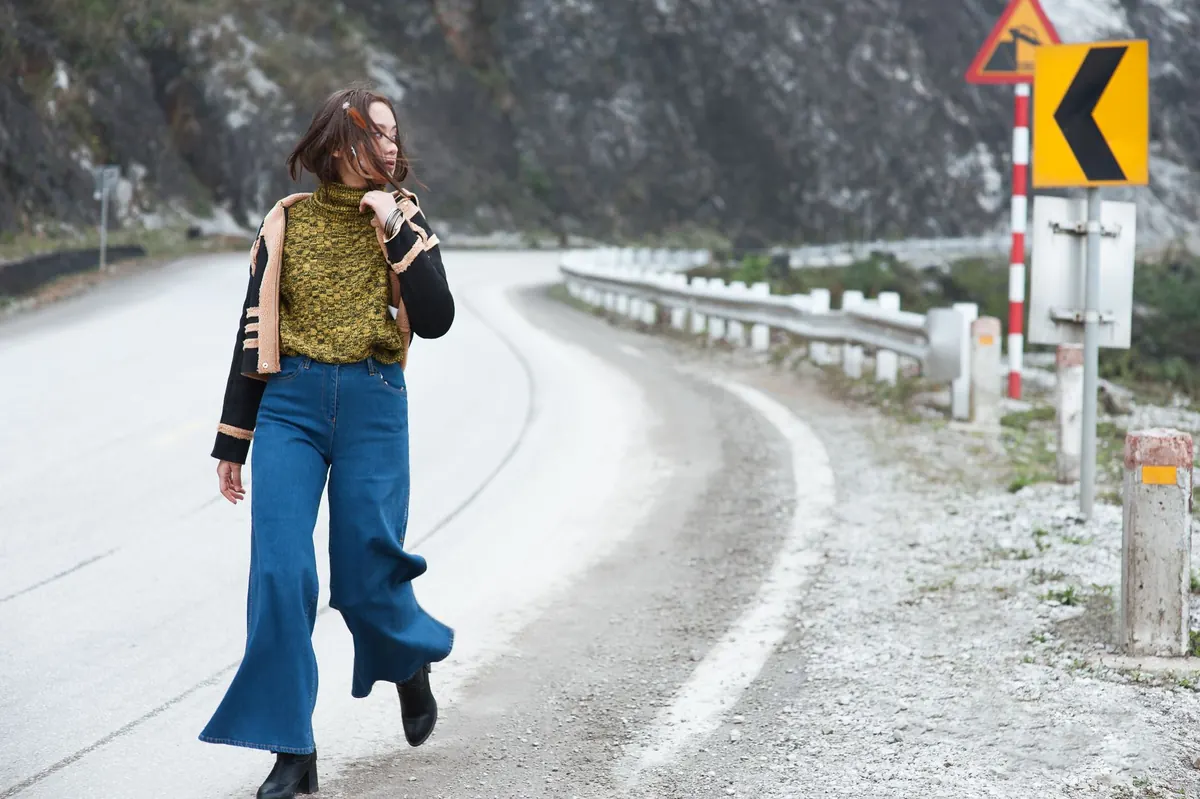
Short jackets are the safest bet. A suede or faux-shearling aviator, a corduroy blazer, a cropped denim jacket or a leather bomber all finish at the waist or above, leaving the flare to do its work. This is the shape that reads most clearly as seventies.
Long coats work beautifully too, provided they go all the way. An ankle-skimming wool coat, a trench or a maxi Afghan coat creates one long line from shoulder to boot. What to avoid is the awkward midi: a hem landing in the middle of the flare breaks the sweep. If a midi coat is your favourite, wear it open so the flare is visible beneath, or belt it and keep the jeans narrow enough at the top to balance the look.
Boots, and What to Do With the Hem
Knee-high boots under a long flare are the autumn cheat code: the boot disappears, your leg looks endless and you stay warm. A block heel is more wearable than a stiletto and gives the flare the lift it needs, especially if the jeans are a little long.
Ankle boots are trickier. They work if the jean is long enough to cover the shaft, or if you are wearing cropped flares that finish above the ankle, where a visible boot and a thick ribbed sock look intentional rather than accidental. Cowboy boots suit wider, cropped flares. Platform boots and clogs are period-correct and practical for wet pavements.
Whatever you choose, check the break. With your shoes on, the hem should sit just above the ground at the back. Anything longer drags, frays and soaks up rain; anything shorter turns a sweeping flare into a wide-leg trouser. If your flares are vintage and long, get them hemmed wearing the boots you will wear most.
Getting the Proportions Right: A Quick Checklist
- Waist visible. Tucked, half-tucked or belted. If you cannot see where your waist is, neither can anyone else.
- One loose layer only. If the jeans are wide, keep the top fitted, or balance a loose jumper with a structured jacket.
- Layers in odd numbers. Vest, knit and coat reads better than a vest and a knit alone.
- Colour limited to three. Denim, one neutral and one rich shade is plenty.
- Boots chosen before the hem. Decide your footwear, then adjust the length.
- Walk tested. Take ten steps, sit down, stand up. If you are hitching fabric, something needs rethinking.
Colour and Texture: Building the Seventies Palette
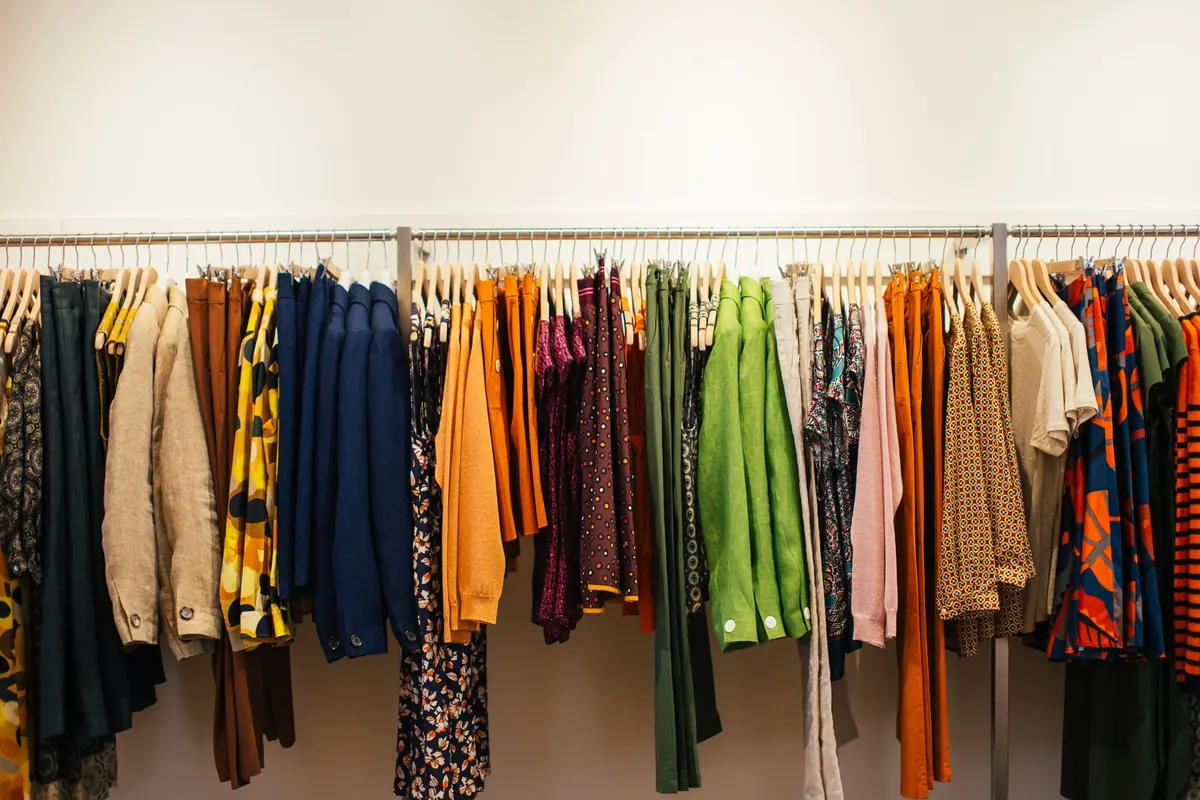
Autumn is the friendliest season for retro dressing because the colours already agree with you. Rust, mustard, camel, chocolate brown, olive, plum and a deep teal all sit happily against indigo denim. Cream and oatmeal lighten the mix without turning it twee.
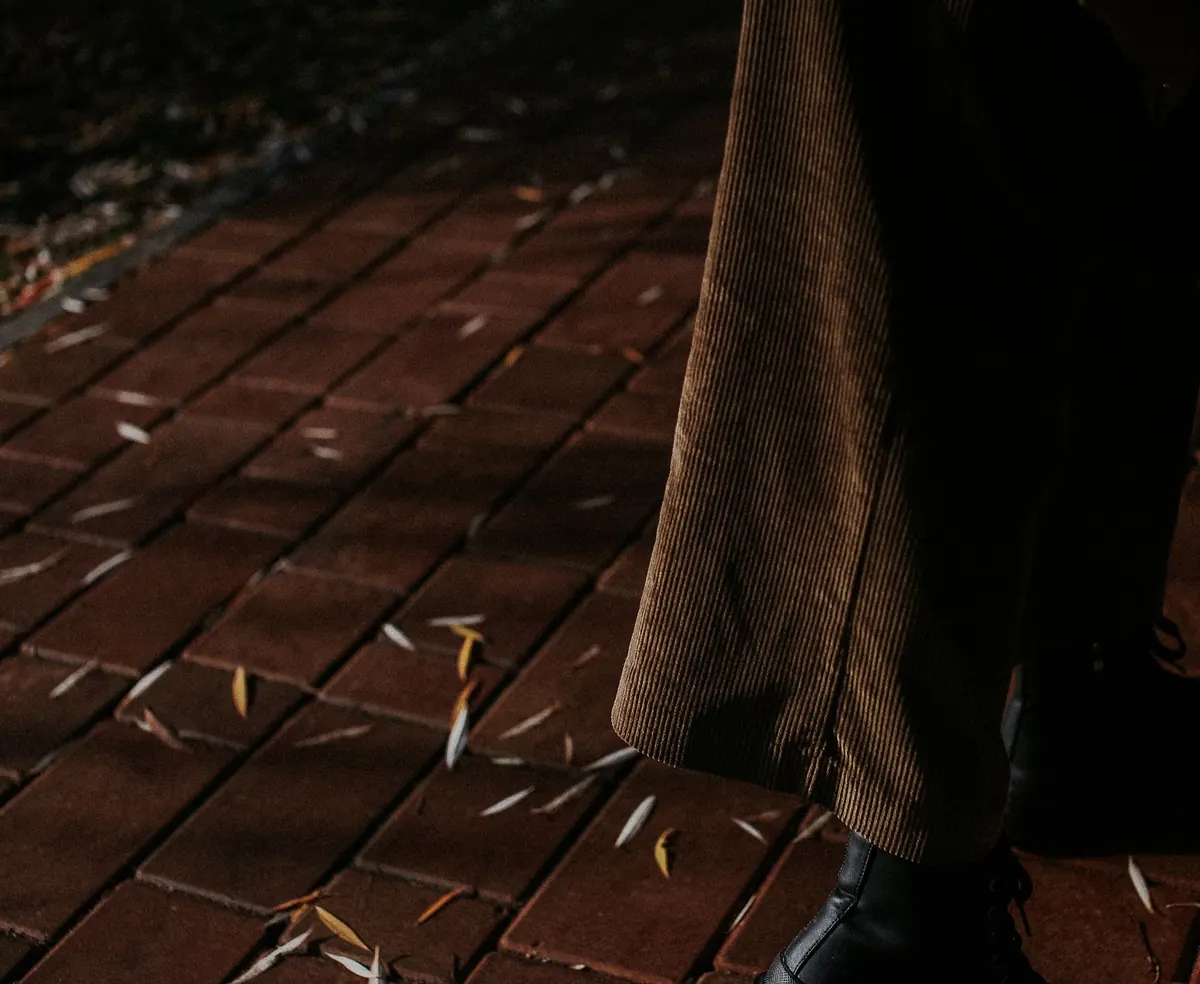
Texture does the rest. Corduroy, suede, brushed wool, chunky cable knit and denim together create depth that flat fabrics cannot. Add a silk scarf at the neck, a baker boy cap, a slim roll neck under a shirt, or a pair of tortoiseshell sunglasses if the sun makes an appearance. Keep the jewellery to one statement piece — a gold pendant or a chunky ring — and let the flare be the drama.
The Two-Minute Mirror Check
Before you leave the house, stand back from the mirror and look at three things: your waist, your hem and your boots. Then turn sideways. If the outfit makes one clean line from shoulder to hem, you have got it right. If you can see fabric pooling, pulling or bunching anywhere, take off the outermost layer and try a thinner one.
Layering over flares is really about trust: trust the jeans to be the statement, and keep everything else quiet, fitted and warm. Do that and you will wear the same pair from September to November without it ever looking like a compromise.
Photo: Thang Nguyen / Pexels
You Might Also Like
From Gloucester Road's charity-shop trail to Sunday swaps in Southville, here's how to hunt, repair and trade retro fashion finds across Bristol.
A practical guide to the vintage cues — silhouette, fabric, colour and accessories — that make an outfit read retro rather than fancy dress, plus how to style them for everyday wear.